

The Quiet Luxury Test: How to Tell When Design Is Doing the Talking
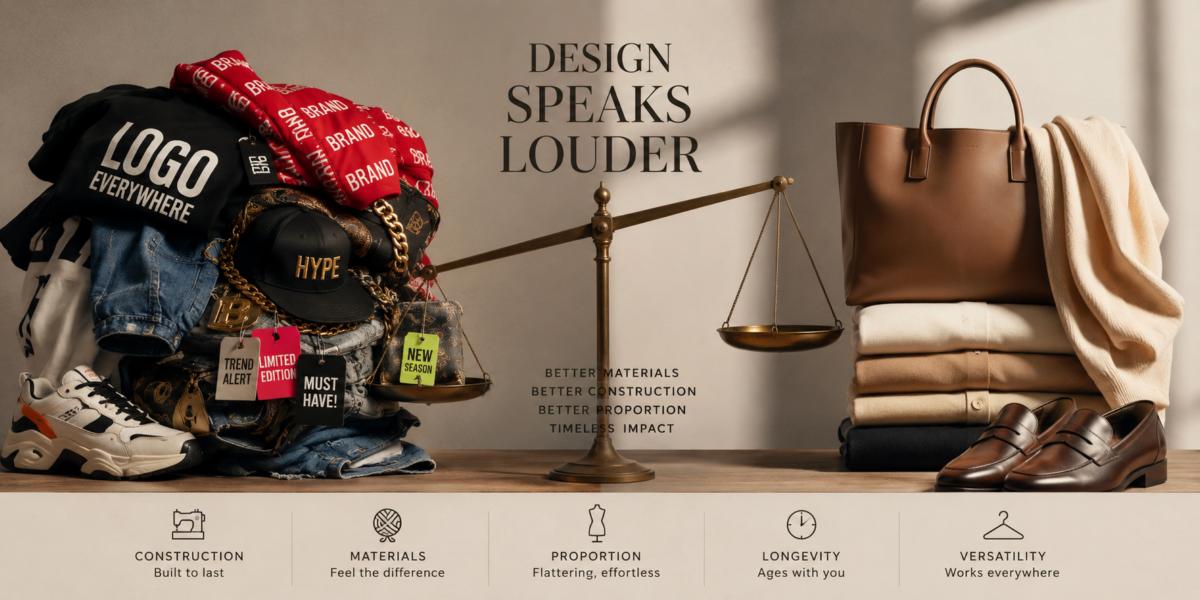 A jacket can clear its throat without shouting a brand name from across the street. Some garments arrive dressed like press releases, coated in logos and trend alarms. Others simply exist with suspicious confidence, as though they have nothing to prove and excellent tailoring to back up the claim.
Quiet luxury has become a phrase tossed around with the enthusiasm usually reserved for miracle kitchen gadgets and celebrity skincare routines. Yet the idea itself is older than social media and far more practical than seasonal buzzwords suggest. It is not about dressing like a secret billionaire who owns three vineyards and answers emails from a boat. It is about design that earns attention through construction, materials, and proportion rather than through marketing volume.
When Clothing Stops Asking for Approval
Loud branding works because it communicates instantly. A recognizable logo tells a story before the fabric gets a chance to introduce itself. There is nothing automatically wrong with that. Fashion has always included spectacle and identity.The trouble begins when branding becomes the entire conversation.
A beautifully made coat can survive changing trends because its value is not tied to what happened to be popular during one particular season. Trend-heavy pieces often rely on novelty. Once the novelty fades, the item can feel oddly stranded, like a party guest still wearing glow sticks on Monday morning.
Quiet luxury, by contrast, asks a different question: if all labels disappeared overnight, would the piece still deserve space in the wardrobe?
The Construction Test
Design speaks first through construction. This is the part many shoppers overlook because it hides in plain sight.Look at seams. Clean stitching, even spacing, and secure finishing matter more than clever advertising campaigns. Uneven stitching or loose threads may not doom a garment entirely, but they can reveal rushed manufacturing.
Pay attention to how clothing hangs on the body rather than the hanger. A well-made blazer, for example, should follow natural lines without collapsing or fighting against movement. Structure should support the wearer, not negotiate aggressively with gravity.
Some useful checkpoints include:
- Aligned patterns and seams
- Smooth hems without puckering
- Buttons securely attached
- Linings that sit neatly rather than twisting
- Zippers that move without requiring diplomatic intervention
Materials Tell Their Own Story
Fabric often reveals more about quality than branding ever can.Natural materials like wool, cotton, silk, and leather frequently age with greater character when properly maintained. That does not mean synthetic materials are automatically inferior. Technical fabrics can perform brilliantly for specific uses. The key is whether the material suits the garment's purpose and feels thoughtfully selected rather than conveniently inexpensive.
Touch matters.
Run fabric between your fingers. Does it feel dense, balanced, and resilient, or thin and oddly tired before it has even lived a life? A sweater should not seem emotionally defeated on the rack.
Proportion Is the Quiet Power Move
Good proportion is harder to fake than a logo. Shoulder width, sleeve length, collar shape, bag scale, heel height, and trouser break all affect whether an item looks intentional.This is where restraint matters. A plain black handbag can look expensive or anonymous depending on proportion. A white shirt can look crisp or like emergency office laundry. The difference often sits in tiny decisions: collar spread, cuff weight, fabric opacity, button placement.
Before buying, ask whether the item improves the outfit without demanding applause. Strong design often gives the wearer more presence, not the product more noise.
The Cost Per Wear Reality Check
Thoughtful buying is not about choosing the most expensive option. Price and quality are related often enough to be inconvenient, but not so reliably that your bank account should be bullied.A better test is cost per wear. A well-made pair of shoes worn weekly for five years may be wiser than a flashy pair worn twice before retirement in the back of the closet. The closet, of course, never forgets. It keeps receipts in the form of regret.
Buy for your actual life. If you commute, walk, spill coffee, carry too many things, or sit like a folded map, your clothes should be able to participate.
Label Less, Look More
The quiet luxury test is simple: remove the hype, then judge what remains.Examine construction. Feel the materials. Study proportion. Consider whether the design fits your life and whether it can age without begging for relevance. Logos can be enjoyable, trends can be fun, and fashion should never become a tax audit with sleeves. But the strongest wardrobes are built from pieces that keep making sense after the noise moves elsewhere.
Seam and Be Seen
The best design does not always announce itself immediately. Sometimes it waits until the tenth wear, when the coat still holds its shape, the bag still looks right, and the shoes have become better rather than merely older. That is when clothing starts doing the talking, quietly, clearly, and without needing a billboard across the chest.Article kindly provided by urbalenti.com
Latest Articles
- When the Location Is Wearing the Clothes Too: Choosing Backdrops That Strengthen a Fashion Story
- How to Choose a Martial Arts Uniform That Moves With You
- From Shop Floor to Storyboard: What Retail Spaces Can Teach Fashion Photographers
- The Quiet Luxury Test: How to Tell When Design Is Doing the Talking
- Using Location as a Fashion Storytelling Tool
- Why Modern Style Is Becoming More Regional Instead of Global
- How Small Communities Quietly Became the Biggest Driver of Custom Clothing Culture
- How Climate Should Influence Your Wardrobe More Than Style Trends
- The Fit Illusion: Why Two Identical Sizes Can Feel Completely Different
- Micro-Fragrance Wardrobes: Why Owning 5 Small Bottles Can Beat 1 Big Signature Scent
- Why Your Wardrobe Feels Wrong Even When It Looks Good
- Capturing Real Emotion Without Telling Anyone to Smile
- Fashion Forward: Emotional Storytelling in Technical Cultures
- The Psychology of Tattoo Aesthetics: Why Certain Imagery Resonates
- Style That Works With Your Body, Not Against It
- Fashion Tourism on Wheels: Curated Shopping Routes Led by Chauffeur Guides
- The Charm of Certainty in a World of Indecision
- Can an Everyday T-Shirt Be Turned into a Modern Heirloom?
- Color, Ceremony, and the Psychology of Celebration
- Styling Graphic T-Shirts for Different Body Types
- Accessories
- Jewellery
- Footwear
- Skirts and Dresses
- Shirts and Blouses
- Beauty and Makeup
- Fashion Photography
- Sustainable Fashion
- Street Style
- Fashion History
- Fashion Business
- Fashion Styling
- Fashion Events
- Plus-Size Fashion
- Men's Fashion
- Women's Fashion
- Fashion Blogging
- Fashion Trends
- Fashion Retailers
- Fashion Tips and Advice
- Fashion Business Startups
- Fashion Around the World
- Lingerie
- Sportswear
- Weddings