

The Fit Illusion: Why Two Identical Sizes Can Feel Completely Different
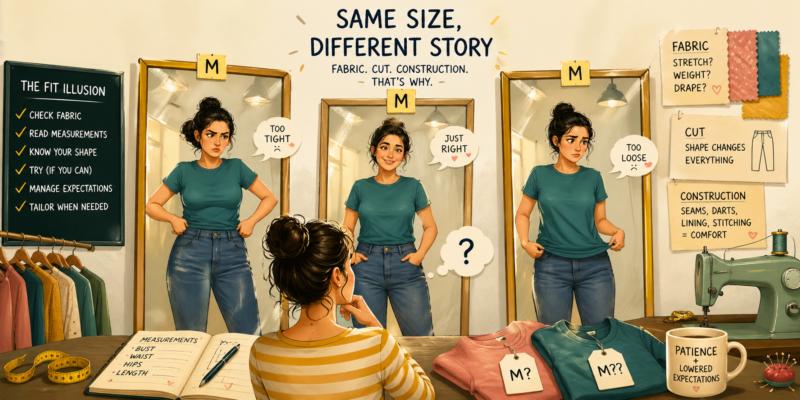 A medium that hugs like a supportive friend in one store can feel like a betrayal in another. Clothing sizes promise consistency, yet reality behaves more like a loose suggestion than a firm rule. Anyone who has carried three versions of the "same size" into a fitting room knows this quiet chaos well. One fits, one pinches, and one makes you question your life choices.
Fabric Plays Tricks on You
Material is the first culprit. A cotton shirt and a polyester blend might share the same label, but they don't behave the same way on your body. Cotton tends to breathe and relax, while synthetics often hold their structure more rigidly. Add stretch fabrics like elastane into the mix, and suddenly a garment can forgive a lot—or cling like it's holding a grudge.Weight matters too. A heavier fabric drapes differently, often smoothing over areas, while lighter materials may cling or shift unpredictably. That breezy linen shirt might look effortless on a hanger, but once worn, it has its own agenda, including wrinkles that appear faster than a plot twist.
Cut Is Where the Real Drama Happens
Two garments labeled the same size can have entirely different cuts. A slim fit shirt narrows through the torso, while a regular fit leaves more room. Even subtle differences in shoulder width or sleeve tapering can dramatically change how something feels.Designers make deliberate choices about how clothing sits on the body. High-rise versus mid-rise pants, tapered versus straight legs—these decisions shape the experience more than the number on the tag. It's less about size and more about geometry. And geometry, unfortunately, does not negotiate.
Some brands design for a particular body type. Others seem to design for a theoretical human who exists only in fashion sketches. Trying to predict which one you're dealing with can feel like solving a puzzle with missing pieces.
Construction Details You Never See
Seams, stitching, and internal structure quietly determine comfort. A well-constructed garment distributes tension evenly, while a poorly made one can pull in odd places. That slight twisting at the side seam or the collar that won't sit flat isn't your imagination—it's construction.Consider lining as well. A lined jacket might feel smoother and more structured, while an unlined one can feel lighter but less forgiving. Even the placement of darts—those small folds sewn into fabric—can affect how a piece contours to your body.
Sometimes, the difference comes down to millimeters. Millimeters that, apparently, have strong opinions.
Why Brands Don't Agree on Size
Standardized sizing sounds logical, but in practice, it's loosely interpreted. Brands develop their own sizing charts based on target customers, aesthetic goals, and, occasionally, optimism. What one brand calls a medium might align with another's small or large.Vanity sizing complicates things further. Some labels intentionally adjust measurements so customers feel better about fitting into a smaller size. It's flattering until you switch brands and reality taps you on the shoulder.
The result is inconsistency that turns shopping into guesswork. Labels suggest precision, but they rarely deliver it.
Spotting Differences Before You Buy
There are ways to reduce surprises, though none are foolproof:- Check fabric composition on the tag—look for stretch percentages.
- Compare measurements rather than relying on size labels.
- Read product descriptions for fit terms like "relaxed" or "tailored."
- Look closely at product photos, especially how the fabric falls.
Adjusting Expectations Without Losing Your Mind
Consistency across brands would be convenient, but clothing has never been particularly interested in convenience. Accepting that sizing is flexible—sometimes wildly so—can reduce frustration. The number on the label is not a verdict. It's closer to a rough estimate, like a weather forecast that forgot to mention the storm.Trying multiple sizes of the same item is not overthinking; it's strategy. Many experienced shoppers grab two or three sizes without hesitation, knowing that the fitting room will decide the winner. This approach saves time in the long run, even if it looks like preparation for a fashion-based experiment.
There's also value in learning which brands tend to align with your proportions. Over time, patterns emerge. Some labels consistently run narrow in the shoulders, others generous in the waist. Treat this knowledge like a personal map—it won't guide you everywhere, but it helps avoid obvious dead ends.
When Fit Is Close Enough but Not Quite
Sometimes a garment is almost right. It fits well in most areas but misses the mark in one stubborn spot. This is where small adjustments can make a difference. Tailoring isn't reserved for formalwear; even casual pieces can benefit from minor tweaks.Simple alterations—hemming pants, taking in a waist, adjusting sleeve length—can transform something from "almost" to "finally." The key is recognizing which issues are fixable. Length is usually manageable. Overall tightness or poor proportions are far less forgiving.
Of course, not every item is worth the effort. Spending more on alterations than the garment itself tends to defeat the purpose, unless there's a strong attachment or unusually good fabric involved.
Why Trying It On Still Matters
Online shopping has made convenience king, but it also increases the chances of disappointment. Photos and descriptions can only communicate so much. They don't show how a waistband feels after sitting down or how fabric behaves after a few steps.Trying clothes on, when possible, remains the most reliable method. Movement reveals what static standing cannot. Sit, stretch, reach—basic motions expose whether a piece works in real life or just in a carefully staged image.
Even then, mirrors can be deceptive. Lighting, angles, and posture all play a role. A garment that seems perfect under bright store lights might feel different in everyday conditions. The goal isn't perfection in the fitting room—it's functionality beyond it.
Seams Like a Personal Problem
Fit inconsistencies aren't going away anytime soon. They're built into how clothing is designed, produced, and marketed. Understanding the variables—fabric, cut, construction—turns confusion into something more manageable.Clothing sizes may claim certainty, but the experience of wearing them tells a different story. Navigating that gap requires patience, a bit of experimentation, and occasionally the willingness to laugh at a shirt that clearly had other plans.
In the end, the goal isn't to find a perfect size. It's to find what works, even if the label insists on calling it something else entirely.
Article kindly provided by willowandthread.shop
Latest Articles
- When the Location Is Wearing the Clothes Too: Choosing Backdrops That Strengthen a Fashion Story
- How to Choose a Martial Arts Uniform That Moves With You
- From Shop Floor to Storyboard: What Retail Spaces Can Teach Fashion Photographers
- The Quiet Luxury Test: How to Tell When Design Is Doing the Talking
- Using Location as a Fashion Storytelling Tool
- Why Modern Style Is Becoming More Regional Instead of Global
- How Small Communities Quietly Became the Biggest Driver of Custom Clothing Culture
- How Climate Should Influence Your Wardrobe More Than Style Trends
- The Fit Illusion: Why Two Identical Sizes Can Feel Completely Different
- Micro-Fragrance Wardrobes: Why Owning 5 Small Bottles Can Beat 1 Big Signature Scent
- Why Your Wardrobe Feels Wrong Even When It Looks Good
- Capturing Real Emotion Without Telling Anyone to Smile
- Fashion Forward: Emotional Storytelling in Technical Cultures
- The Psychology of Tattoo Aesthetics: Why Certain Imagery Resonates
- Style That Works With Your Body, Not Against It
- Fashion Tourism on Wheels: Curated Shopping Routes Led by Chauffeur Guides
- The Charm of Certainty in a World of Indecision
- Can an Everyday T-Shirt Be Turned into a Modern Heirloom?
- Color, Ceremony, and the Psychology of Celebration
- Styling Graphic T-Shirts for Different Body Types
- Accessories
- Jewellery
- Footwear
- Skirts and Dresses
- Shirts and Blouses
- Beauty and Makeup
- Fashion Photography
- Sustainable Fashion
- Street Style
- Fashion History
- Fashion Business
- Fashion Styling
- Fashion Events
- Plus-Size Fashion
- Men's Fashion
- Women's Fashion
- Fashion Blogging
- Fashion Trends
- Fashion Retailers
- Fashion Tips and Advice
- Fashion Business Startups
- Fashion Around the World
- Lingerie
- Sportswear
- Weddings