
The Psychology of Tattoo Aesthetics: Why Certain Imagery Resonates
 Some images refuse to behave. They linger, replay themselves uninvited, and occasionally pop back up years later while standing in line for coffee. Tattoo imagery has a special talent for this kind of mental persistence. Even people who swear they will "never get one" can describe specific designs in detail, often with strong opinions attached. That reaction is not accidental; it is psychology doing its quiet, efficient work.
At a glance, tattoos compress meaning, emotion, and identity into a visual form that has to work fast. Skin moves, ages, and rarely offers perfect lighting, so the imagery has evolved to survive real-world conditions. What remains is a visual language tuned for clarity, memory, and emotional impact, which happens to align neatly with how human perception already works.
Bold Lines and the Brain's Need for Clarity
The human visual system is not subtle when it comes to first impressions. It likes edges. It prefers contrast. It wants to know where one thing ends and another begins without filing a formal request. Bold outlines in tattoos do exactly that. They create immediate legibility, even at a distance or from an awkward angle, which the brain rewards with quicker recognition and stronger recall.From a design psychology standpoint, strong lines reduce cognitive load. The viewer does not have to squint, interpret, or decode. The image announces itself. This is why minimalist tattoo designs with confident line work often feel more powerful than overly intricate pieces that blur into visual noise over time. The brain would rather remember one strong idea than ten clever ones arguing among themselves.
There is also a permanence factor at play. Thick lines signal durability, even subconsciously. They imply that the image is meant to last, which mirrors the commitment associated with tattoos themselves. The mind tends to take permanent-looking things more seriously, whether or not it consciously admits that bias.
Contrast as Visual Drama Without the Monologue
High contrast functions like a well-timed pause in conversation. It creates emphasis without explanation. Black against skin, or sharply separated light and dark areas, triggers the brain's attention systems almost instantly. This is rooted in survival instincts; contrast helped distinguish threats, tools, and faces long before it helped anyone choose body art.In tattoos, contrast provides structure and emotional tone at the same time. Stark designs can feel assertive or confrontational, while softer contrast reads as introspective or nostalgic. None of this requires a caption. The viewer's visual system fills in the emotional context automatically, which is efficient and slightly manipulative in the best design sense of the word.
There is humor hiding here too, whether intended or not. A tiny, high-contrast tattoo can command more attention than a large, complex one, much like the quiet person in a room who somehow controls the conversation by saying almost nothing. Visual understatement paired with contrast has a way of feeling confident, and confidence is remarkably persuasive.
Symbols That Do the Heavy Lifting
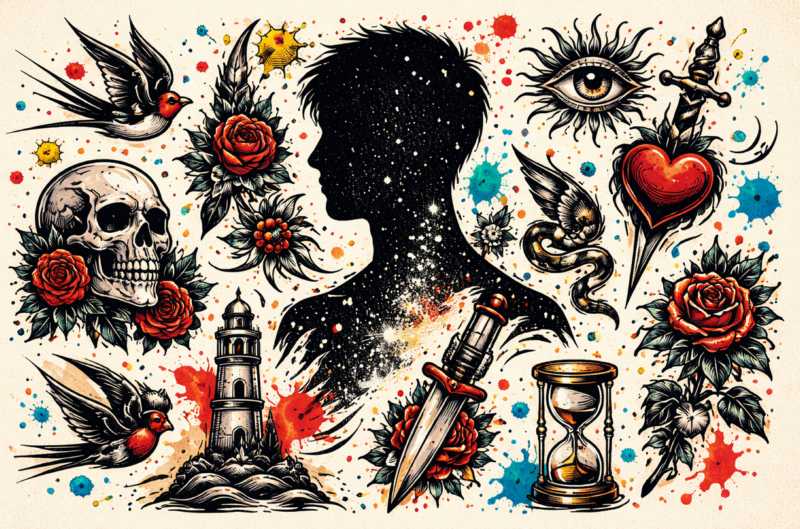
Symbols are shortcuts, and the brain loves shortcuts almost as much as it loves snacks. Tattoo imagery often relies on symbols that compress complex ideas into simple visual forms. A skull is not just a skull. It can signal mortality, rebellion, protection, humor, or all of the above depending on style and context. The efficiency of symbols allows the viewer to project meaning rather than receive instructions.From a psychological perspective, symbolic imagery invites participation. Instead of telling the brain what to think, it offers a framework and lets personal experience fill in the gaps. This creates a stronger emotional bond than literal imagery ever could. A symbolic tattoo feels personal even to an outsider, because the brain assumes there is a story behind it. Humans are wired to respect stories, especially when they are not fully explained.
There is also a memory advantage. Abstract or symbolic images are easier to recall than highly specific scenes. The mind stores them as concepts rather than snapshots, which makes them more durable over time. This is one reason traditional tattoo motifs have survived cultural shifts, fashion cycles, and questionable decisions made at age nineteen.
Visual Weight and Emotional Gravity
Tattoo designs often feel heavier than their actual size would suggest. This sense of visual weight comes from balanced composition, controlled negative space, and deliberate placement. The brain reads these cues as intentionality. Intentional images feel meaningful, and meaningful images command attention.Design psychology shows that balanced visuals create a sense of stability, while slightly off-balance compositions introduce tension. Tattoo artists have long exploited this without needing academic terminology. A design that leans, stretches, or wraps around the body subtly activates the viewer's spatial awareness, making the image feel alive rather than decorative.
Some designs lean into seriousness without apology. Religious icons, memorial pieces, or stark geometric forms often avoid ornamentation altogether. Their restraint signals respect. Humor steps aside, and the image asks to be taken on its own terms. This tonal shift is part of why tattoo aesthetics feel so versatile; they can carry jokes, grief, pride, or defiance without changing the underlying visual rules.
Ink That Leaves a Mark on the Mind
The staying power of tattoo imagery has less to do with rebellion and more to do with cognition. These designs work because they align with how humans see, remember, and assign meaning. Bold lines offer clarity. Contrast creates focus. Symbols invite interpretation. Together, they form imagery that refuses to be ignored.What makes tattoo aesthetics especially effective is their honesty. They do not pretend to be neutral. Every line declares intent. Every choice has consequence. The brain recognizes this commitment and responds accordingly, storing the image not as background decoration but as a statement. That is why even a glimpse can feel loaded with meaning.
Call it visual psychology, call it design instinct, or call it ink doing what ink does best. Whatever the label, tattoo imagery has mastered the art of staying put, both on skin and in memory. That is a mark most designs would be proud to leave behind.
Article kindly provided by tattooednun.com
Latest Articles
- When the Location Is Wearing the Clothes Too: Choosing Backdrops That Strengthen a Fashion Story
- How to Choose a Martial Arts Uniform That Moves With You
- From Shop Floor to Storyboard: What Retail Spaces Can Teach Fashion Photographers
- The Quiet Luxury Test: How to Tell When Design Is Doing the Talking
- Using Location as a Fashion Storytelling Tool
- Why Modern Style Is Becoming More Regional Instead of Global
- How Small Communities Quietly Became the Biggest Driver of Custom Clothing Culture
- How Climate Should Influence Your Wardrobe More Than Style Trends
- The Fit Illusion: Why Two Identical Sizes Can Feel Completely Different
- Micro-Fragrance Wardrobes: Why Owning 5 Small Bottles Can Beat 1 Big Signature Scent
- Why Your Wardrobe Feels Wrong Even When It Looks Good
- Capturing Real Emotion Without Telling Anyone to Smile
- Fashion Forward: Emotional Storytelling in Technical Cultures
- The Psychology of Tattoo Aesthetics: Why Certain Imagery Resonates
- Style That Works With Your Body, Not Against It
- Fashion Tourism on Wheels: Curated Shopping Routes Led by Chauffeur Guides
- The Charm of Certainty in a World of Indecision
- Can an Everyday T-Shirt Be Turned into a Modern Heirloom?
- Color, Ceremony, and the Psychology of Celebration
- Styling Graphic T-Shirts for Different Body Types
- Accessories
- Jewellery
- Footwear
- Skirts and Dresses
- Shirts and Blouses
- Beauty and Makeup
- Fashion Photography
- Sustainable Fashion
- Street Style
- Fashion History
- Fashion Business
- Fashion Styling
- Fashion Events
- Plus-Size Fashion
- Men's Fashion
- Women's Fashion
- Fashion Blogging
- Fashion Trends
- Fashion Retailers
- Fashion Tips and Advice
- Fashion Business Startups
- Fashion Around the World
- Lingerie
- Sportswear
- Weddings