

Capturing Real Emotion Without Telling Anyone to Smile
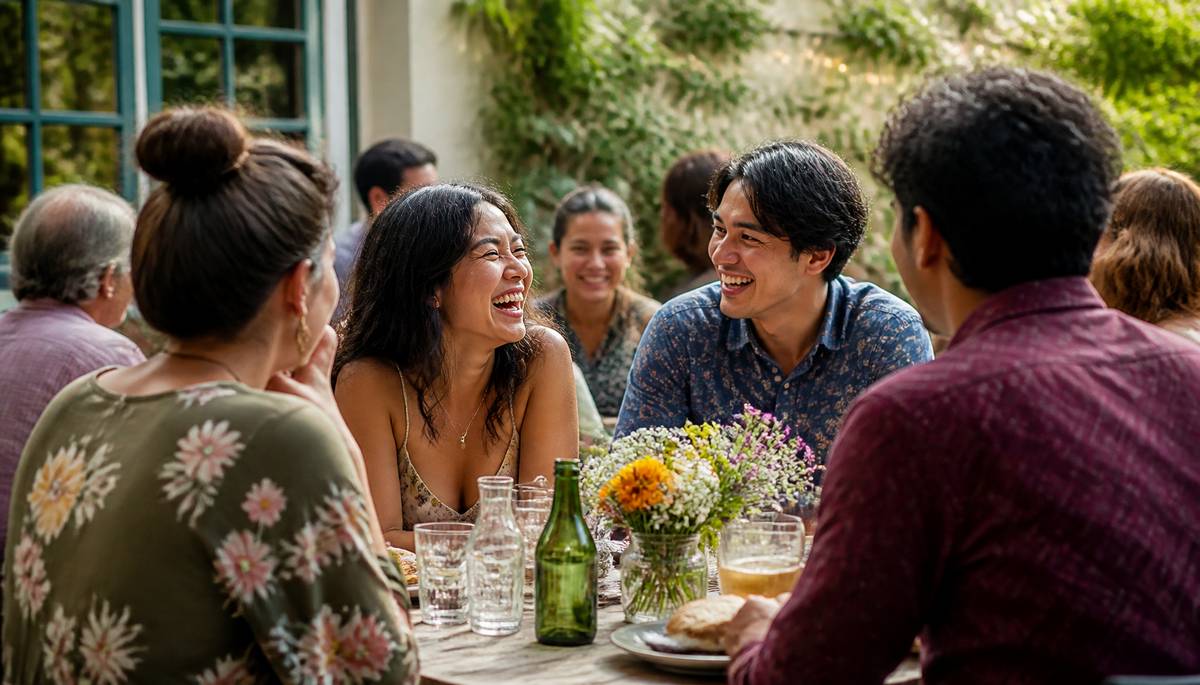 Few instructions drain life from a photograph faster than the cheerful command to "smile." Faces tighten, shoulders stiffen, and suddenly everyone looks like they are posing for a passport photo that went slightly wrong.
Real emotion rarely arrives on cue. It slips out during conversation, during a shared memory, or when someone says something mildly embarrassing at exactly the right moment. A photographer's job is not to manufacture those expressions but to notice them before they disappear.
That requires patience, observation, and occasionally pretending to be very interested in adjusting camera settings while quietly waiting for something genuine to happen.
Observation Beats Direction
Many beginners assume photography is about giving instructions. Stand here. Look there. Tilt your head slightly. Pretend you are having a wonderful time.Unfortunately, people rarely have a wonderful time while pretending to have a wonderful time.
Observation creates better results. Instead of directing every movement, watch how people interact when they forget a camera is nearby. Friends lean closer when they laugh. Family members touch shoulders during emotional moments. Someone always whispers a comment that sends another person into uncontrollable laughter.
These interactions are natural signals. The photographer who notices them early is ready when expressions change.
Patience matters here. Emotional moments develop in small steps, and rushing to interrupt them usually causes the moment to disappear entirely.
Timing Is Everything
A genuine reaction often lasts less than a second. One brief burst of laughter, one surprised glance, one quiet look exchanged across a room.Capturing that instant depends heavily on anticipation.
Good photographers begin to sense when something is about to happen. A group leaning in toward a storyteller suggests laughter is seconds away. Someone pausing during a speech may signal an emotional moment. A child slowly winding up to tell a joke guarantees chaos shortly afterward.
Positioning your finger on the shutter just before these moments unfold dramatically increases the chances of catching the right expression.
Waiting until something happens is usually too late. By then the moment has already finished and everyone has returned to polite facial expressions.
Position Yourself Without Becoming the Center of Attention
Photographers sometimes forget an important detail. People behave differently when they feel watched.Standing directly in front of a group with a large camera can transform relaxed conversation into something resembling a press conference. The atmosphere changes immediately.
Subtle positioning helps preserve natural interaction.
- Step slightly to the side instead of standing directly in front of people.
- Use longer lenses so you can observe from a comfortable distance.
- Move quietly rather than announcing every reposition.
Once people stop noticing the camera, their expressions return to normal. That is where authentic photographs begin to appear.
Body Language Tells the Story First
Emotion usually reveals itself through body language before it reaches the face.A person leaning forward signals interest. A hand reaching for another hand suggests affection. Someone covering their mouth might be trying, unsuccessfully, to contain laughter.
Watching these signals helps photographers anticipate expressions before they fully develop.
A small shift in posture can reveal a coming reaction. Two people exchanging a glance often leads to shared laughter. A pause during conversation might signal a thoughtful moment. These cues are subtle but powerful.
Photographers who learn to read body language capture emotion at the exact moment it surfaces rather than a second later when the moment has already faded.
Let Conversations Do the Heavy Lifting
People rarely show authentic expressions while standing silently in front of a camera. Give them a few seconds of quiet and they begin wondering what they are supposed to do with their hands, their eyebrows, and occasionally their entire personality.Conversation solves this problem instantly.
Encouraging people to talk with each other creates natural reactions without forcing anything. Friends start telling stories. Someone remembers a shared moment from years ago. Another person adds details that may or may not be accurate but are definitely entertaining.
The expressions that follow are real because they come from genuine interaction.
Sometimes the photographer barely needs to do anything beyond standing nearby and keeping the camera ready. In fact, stepping back slightly often improves the moment. Once people feel the attention shift away from them, their guard drops and reactions become far more relaxed.
Occasionally a photographer might ask a simple prompt rather than giving instructions.
- Ask someone how they met the person standing next to them.
- Invite a group to recall their favorite shared memory.
- Encourage siblings to tell an old childhood story.
Allow Small Imperfections
Perfection is surprisingly boring in photographs.A perfectly composed group standing upright with identical smiles might look tidy, but it rarely feels alive. Real emotion often arrives with small imperfections. Someone leans slightly out of line. Another person laughs so hard they briefly forget how chairs work.
These little moments bring energy into the image.
Allowing natural movement also helps people relax. When individuals realize they do not have to hold a precise pose, they stop focusing on how they look and start focusing on the people around them.
That shift is powerful. Authentic expressions begin to appear without effort.
Sometimes the most memorable photo in a series is the one taken just after everyone thought the moment had ended. Someone says one last comment, someone else reacts instantly, and the camera catches it before anyone can return to their carefully prepared smile.
Focus on Connection Instead of Perfection
Authentic photography depends less on technical tricks and more on human awareness.Sharp focus and proper exposure matter, but emotional images come from recognizing connection between people. A quick glance across a room. A reassuring hand on someone's shoulder. A burst of laughter during an unexpected joke.
These interactions create photographs that feel genuine because they represent something real happening between people.
The photographer's role is not to control those interactions but to recognize them early and be ready when they unfold.
Sometimes that means waiting quietly. Sometimes it means repositioning slightly to catch a better angle. Often it simply means paying attention while everyone else is busy enjoying the moment.
Frame of Mind
Photographing emotion without asking anyone to smile requires a different mindset.Patience replaces constant direction. Curiosity replaces control. Instead of arranging people like pieces on a chessboard, the photographer watches the scene develop naturally.
Moments appear when people relax into themselves. A shared glance, an unexpected laugh, a quiet emotional pause. Cameras do not create those expressions. They simply preserve them.
Stay observant, stay ready, and resist the urge to interrupt every interaction with instructions. When people forget the camera exists, real emotion steps forward on its own.
And when that happens, the best photograph is already halfway taken.
Article kindly provided by emmawinslet.com
Latest Articles
- When the Location Is Wearing the Clothes Too: Choosing Backdrops That Strengthen a Fashion Story
- How to Choose a Martial Arts Uniform That Moves With You
- From Shop Floor to Storyboard: What Retail Spaces Can Teach Fashion Photographers
- The Quiet Luxury Test: How to Tell When Design Is Doing the Talking
- Using Location as a Fashion Storytelling Tool
- Why Modern Style Is Becoming More Regional Instead of Global
- How Small Communities Quietly Became the Biggest Driver of Custom Clothing Culture
- How Climate Should Influence Your Wardrobe More Than Style Trends
- The Fit Illusion: Why Two Identical Sizes Can Feel Completely Different
- Micro-Fragrance Wardrobes: Why Owning 5 Small Bottles Can Beat 1 Big Signature Scent
- Why Your Wardrobe Feels Wrong Even When It Looks Good
- Capturing Real Emotion Without Telling Anyone to Smile
- Fashion Forward: Emotional Storytelling in Technical Cultures
- The Psychology of Tattoo Aesthetics: Why Certain Imagery Resonates
- Style That Works With Your Body, Not Against It
- Fashion Tourism on Wheels: Curated Shopping Routes Led by Chauffeur Guides
- The Charm of Certainty in a World of Indecision
- Can an Everyday T-Shirt Be Turned into a Modern Heirloom?
- Color, Ceremony, and the Psychology of Celebration
- Styling Graphic T-Shirts for Different Body Types
- Accessories
- Jewellery
- Footwear
- Skirts and Dresses
- Shirts and Blouses
- Beauty and Makeup
- Fashion Photography
- Sustainable Fashion
- Street Style
- Fashion History
- Fashion Business
- Fashion Styling
- Fashion Events
- Plus-Size Fashion
- Men's Fashion
- Women's Fashion
- Fashion Blogging
- Fashion Trends
- Fashion Retailers
- Fashion Tips and Advice
- Fashion Business Startups
- Fashion Around the World
- Lingerie
- Sportswear
- Weddings