

How Climate Should Influence Your Wardrobe More Than Style Trends
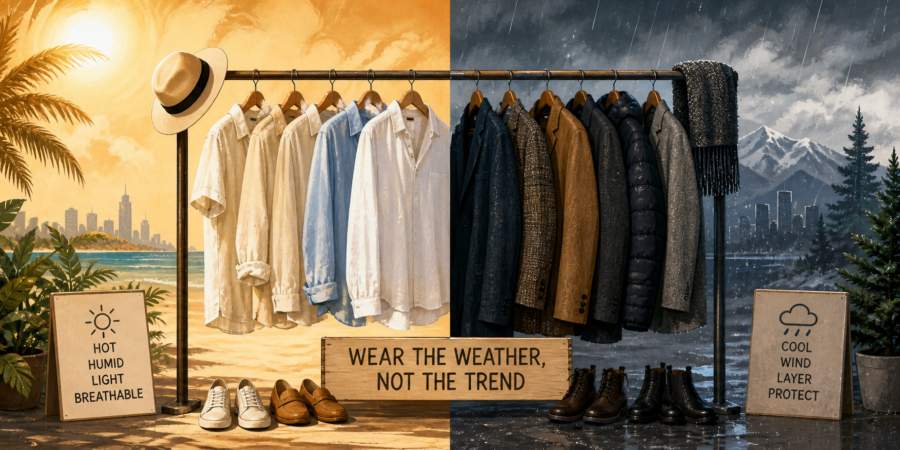 Your wardrobe has a weather report, whether you check it or not.
Fashion trends are loud. Climate is quieter, but far more persuasive. A jacket may look sharp on a website, posed heroically under studio lights, but that same jacket in humid heat can turn into a personal sauna with sleeves. A crisp shirt may seem perfect until a damp afternoon makes it cling like it has abandonment issues. Style matters, but climate decides whether your clothes actually work.
Humidity Is the Real Dress Code
Humidity changes everything. It affects how fabric sits, how quickly clothes dry, and how comfortable you feel after walking more than twelve steps outdoors. In humid places, breathability is not a luxury. It is survival with buttons.Natural fibres such as linen, cotton, tropical wool, and certain lightweight blends tend to perform better because they allow air to move. Linen wrinkles, yes, but in hot climates those wrinkles often look more relaxed than ruined. A perfectly smooth synthetic shirt that traps heat is not elegance; it is a greenhouse experiment with cuffs.
Construction matters too. Unlined or half-lined jackets, looser weaves, and lighter interlinings can make a major difference. A garment can be technically lightweight but still feel oppressive if it is built like armour. This is where many clothes fail: they are designed for appearance first and environment second.
Heat Rewards Structure That Knows When to Back Off
Warm weather does not mean giving up on looking put together. It means choosing structure carefully. A soft-shouldered jacket, an open-weave shirt, or trousers with a clean but relaxed cut can keep shape without trapping the body inside a fabric prison.The best hot-weather clothing creates space between skin and cloth. That tiny bit of airflow is more useful than any dramatic seasonal trend. Slim fits can look sleek in photos, but in high heat they often become a negotiation between dignity and sweat. A slightly easier fit can look refined while allowing the body to cool itself properly.
Serious wardrobes are built around use, not fantasy. Before buying something, ask where it will actually be worn. A heavy blazer in a tropical climate may spend most of its life hanging in the wardrobe, judging your optimism.
Seasonal Variation Deserves Respect
Even warm regions have changes in weather. Rainy months, cooler evenings, air-conditioned interiors, and sudden temperature shifts all affect what makes sense to wear. Good layering is not about piling on clothes. It is about choosing pieces that can be added or removed without ruining the whole outfit.Lightweight overshirts, breathable knits, and unstructured jackets work well because they adapt quickly. They can be carried, draped, or worn without turning into a burden. A rigid, heavily padded layer, on the other hand, becomes a commitment you may regret halfway through the day.- Choose fabrics that dry quickly after rain or humidity exposure
- Prioritize pieces that can be worn across multiple temperature ranges
- Avoid heavy linings unless they serve a clear purpose
- Keep at least one adaptable outer layer for shifting conditions
Why Some Clothes Simply Fail
Some garments fail not because they are poorly made, but because they ignore where they will be worn. Thick denim in extreme heat, fully lined suits in humid environments, or synthetic-heavy shirts in tropical climates all share the same problem: they resist the environment instead of working with it.There is also the issue of expectation. Many clothes are designed in controlled settings and styled for visual impact. Real life adds sweat, movement, and unpredictable weather. That sleek look can collapse quickly when fabric sticks, creases awkwardly, or overheats. A garment that looks slightly relaxed but behaves well in real conditions often ends up looking better over time.
This is where thoughtful selection matters more than trend awareness. It is less about what is currently popular and more about what will still feel right after an hour outdoors, a commute, or a long day moving between spaces with different temperatures.
Dressing Smart Means Dressing for Where You Are
Clothing should cooperate with your environment rather than challenge it. Paying attention to climate leads to fewer regrets, better comfort, and a wardrobe that actually gets used. Trends may influence colour or silhouette, but climate dictates whether those choices hold up outside of ideal conditions.A well-considered wardrobe does not shout for attention. It quietly handles heat, humidity, and shifting weather without constant adjustment. That kind of reliability tends to look better than any seasonal statement piece trying too hard to survive the day.
Forecast Worth Wearing
Weather may not care about your outfit, but your outfit should care about the weather. When clothing aligns with climate, everything feels easier: movement, comfort, even confidence. The goal is not to outdress the environment, but to move through it without friction, ideally without needing a second shirt by lunchtime.Article kindly provided by narrytailor.com
Latest Articles
- When the Location Is Wearing the Clothes Too: Choosing Backdrops That Strengthen a Fashion Story
- How to Choose a Martial Arts Uniform That Moves With You
- From Shop Floor to Storyboard: What Retail Spaces Can Teach Fashion Photographers
- The Quiet Luxury Test: How to Tell When Design Is Doing the Talking
- Using Location as a Fashion Storytelling Tool
- Why Modern Style Is Becoming More Regional Instead of Global
- How Small Communities Quietly Became the Biggest Driver of Custom Clothing Culture
- How Climate Should Influence Your Wardrobe More Than Style Trends
- The Fit Illusion: Why Two Identical Sizes Can Feel Completely Different
- Micro-Fragrance Wardrobes: Why Owning 5 Small Bottles Can Beat 1 Big Signature Scent
- Why Your Wardrobe Feels Wrong Even When It Looks Good
- Capturing Real Emotion Without Telling Anyone to Smile
- Fashion Forward: Emotional Storytelling in Technical Cultures
- The Psychology of Tattoo Aesthetics: Why Certain Imagery Resonates
- Style That Works With Your Body, Not Against It
- Fashion Tourism on Wheels: Curated Shopping Routes Led by Chauffeur Guides
- The Charm of Certainty in a World of Indecision
- Can an Everyday T-Shirt Be Turned into a Modern Heirloom?
- Color, Ceremony, and the Psychology of Celebration
- Styling Graphic T-Shirts for Different Body Types
- Accessories
- Jewellery
- Footwear
- Skirts and Dresses
- Shirts and Blouses
- Beauty and Makeup
- Fashion Photography
- Sustainable Fashion
- Street Style
- Fashion History
- Fashion Business
- Fashion Styling
- Fashion Events
- Plus-Size Fashion
- Men's Fashion
- Women's Fashion
- Fashion Blogging
- Fashion Trends
- Fashion Retailers
- Fashion Tips and Advice
- Fashion Business Startups
- Fashion Around the World
- Lingerie
- Sportswear
- Weddings