

Why Modern Style Is Becoming More Regional Instead of Global
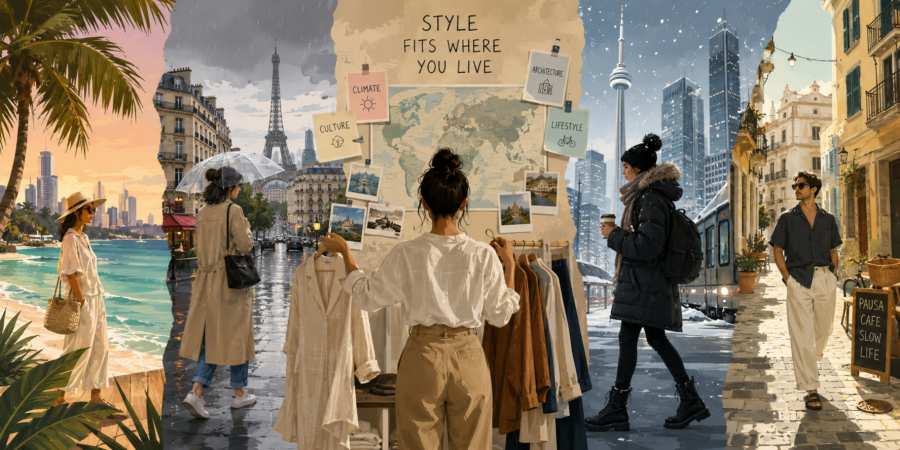 A linen shirt behaves very differently in Singapore than it does in Stockholm. In one city, it becomes a survival tool against humidity. In another, it spends half the year hiding under wool coats while wondering what happened to summer. Fashion used to pretend geography barely mattered. Global brands pushed the same sneakers, jackets, and silhouettes into every shopping district from Dubai to Toronto. Now that illusion is cracking.
Modern style is becoming more regional because daily life keeps refusing to cooperate with universal fashion trends. Climate matters. Architecture matters. Transportation matters. Even the distance between a coffee shop and the nearest subway entrance matters. People are dressing less for a vague online aesthetic and more for the physical reality surrounding them every morning.
Climate Has Stopped Being Ignored
For years, social media encouraged a strange kind of visual uniformity. Someone living in a tropical city could scroll through endless photos of oversized leather jackets and layered knitwear, briefly forgetting that stepping outside in that outfit would feel like being wrapped in a heated blanket inside a greenhouse.Regional style now reflects practical needs again. In hot cities such as Bangkok, lightweight fabrics, relaxed cuts, and breathable shoes are not merely fashion preferences. They are emotional support systems. Nobody wants to arrive at dinner looking like they lost a wrestling match with the weather.
Meanwhile, colder cities have moved toward clothing built for actual winter instead of cinematic winter. There is a difference. Cinematic winter involves standing attractively near falling snow while holding coffee. Actual winter involves wind attacking your face from angles previously unknown to science.
As climate patterns become more extreme, clothing choices become even more location-specific. Residents of rainy cities increasingly prioritize waterproof outerwear that still looks sharp. Desert regions lean into sun protection through looser silhouettes and lighter colors. Fashion finally remembers humans possess skin and sweat glands.
Architecture Quietly Shapes What People Wear
Cities train people visually. Someone living among glass towers, minimalist interiors, and polished transit systems often develops a cleaner, sharper wardrobe. Structured coats and monochrome palettes feel natural in places dominated by steel, concrete, and modern design.Older cities tend to encourage more textured and layered styles. Narrow streets, historic buildings, and slower rhythms often pair well with vintage-inspired clothing, heavier fabrics, and pieces carrying visible character. A perfectly sterile outfit can feel oddly misplaced beside centuries-old stone architecture.
Even practical movement changes style choices. Cities built around walking encourage comfortable footwear and adaptable layering. Car-dependent regions allow for more dramatic outfits because people spend less time exposed to weather or physical movement. Someone who walks three miles a day through crowded streets develops a very different relationship with shoes than someone whose daily commute mostly involves cup holders.
This explains why certain online trends collapse upon contact with real life. Tiny sunglasses may photograph beautifully in controlled lighting. They become less impressive when sunlight turns an entire sidewalk into the surface of Mercury.
Local Culture Still Has More Influence Than Algorithms
Global fashion platforms made it seem as though trends spread evenly everywhere. In reality, local culture filters every trend before people adopt it. Cities absorb outside influences while reshaping them according to regional attitudes about professionalism, modesty, nightlife, status, and comfort.Tokyo, for example, often embraces precision and experimentation simultaneously. Scandinavian cities continue leaning toward restrained functionality. Mediterranean regions frequently maintain a stronger relationship with expressive dressing and visible elegance. None of these preferences appeared accidentally. They developed from decades of cultural habits, climate conditions, and social expectations interacting together.
Younger generations increasingly recognize this. Instead of chasing a completely globalized look, many people now build wardrobes that feel connected to where they actually live. That does not mean abandoning outside inspiration. It means translating trends rather than copying them outright.
A trend imported directly from another environment can look strangely disconnected. Wearing heavy streetwear designed for chilly urban winters inside a humid coastal city can create the visual impression of somebody preparing for two completely different planets at once.
City Lifestyle Dictates the Modern Uniform
Daily rhythm shapes clothing more than fashion magazines ever could. A person navigating Seoul, London, or New York usually needs outfits capable of surviving long commutes, changing temperatures, crowded public transit, and spontaneous social plans. Style in these cities often becomes modular. Layers matter. Bags matter. Shoes become deeply political.Meanwhile, lifestyles in coastal towns or slower-paced cities tend to encourage softer structure and more relaxed styling. Clothing reflects pace. Fast cities reward efficiency and versatility. Slower environments leave more room for ease, texture, and individuality.
Remote work has intensified this shift. People no longer dress primarily for centralized office culture. They dress for their local routines. Someone working remotely from Lisbon may prioritize breathable fabrics and outdoor-friendly clothing. Someone doing the same job from Chicago during February may resemble a highly fashionable survival expert.
This regionalization also explains why certain luxury brands are adapting their collections to specific markets instead of pushing identical products everywhere. Fashion companies increasingly recognize that customers want clothing suited to real environments, not just digital fantasy worlds populated entirely by attractive people standing beside concrete walls.
Personal Style Works Better When It Belongs Somewhere
One reason people feel frustrated copying online fashion trends is simple. Many outfits are optimized for photography, not life. A look that succeeds in Los Angeles may feel awkward in Copenhagen. An outfit designed around motorcycle culture in Milan may appear strangely theatrical in a quiet suburban district where the loudest machine nearby is a leaf blower.Developing personal style becomes easier when people ask practical regional questions first.
- What weather do I actually live in most of the year?
- How much walking do I do weekly?
- Does my city lean formal or casual?
- What fabrics remain comfortable locally?
- How do people socialize where I live?
There is also growing appreciation for local craftsmanship and regional materials. People increasingly value garments connected to nearby traditions, textile histories, and practical expertise. That shift gives fashion more texture and personality. Global sameness may be efficient for mass production, but it becomes visually dull after a while. Nobody dreams about becoming the human equivalent of a default phone wallpaper.
Hemlines and Skylines
Regional fashion does not mean the world is becoming less connected. It means people are finally mixing global inspiration with local reality in smarter ways. Style becomes more believable when it reflects climate, architecture, movement, and culture instead of pretending every city functions exactly the same.The most interesting wardrobes today often belong to people who understand their environment deeply. They know which fabrics survive local summers, which shoes tolerate local streets, and which silhouettes match the pace of life around them. Their clothing feels grounded rather than borrowed.
Fashion spent years trying to flatten regional differences into one endless international mood board. Now the pendulum is swinging back toward specificity. A city leaves fingerprints on the people living inside it, and increasingly, those fingerprints show up in the closet too.
Article kindly provided by urbalenti.com
Latest Articles
- When the Location Is Wearing the Clothes Too: Choosing Backdrops That Strengthen a Fashion Story
- How to Choose a Martial Arts Uniform That Moves With You
- From Shop Floor to Storyboard: What Retail Spaces Can Teach Fashion Photographers
- The Quiet Luxury Test: How to Tell When Design Is Doing the Talking
- Using Location as a Fashion Storytelling Tool
- Why Modern Style Is Becoming More Regional Instead of Global
- How Small Communities Quietly Became the Biggest Driver of Custom Clothing Culture
- How Climate Should Influence Your Wardrobe More Than Style Trends
- The Fit Illusion: Why Two Identical Sizes Can Feel Completely Different
- Micro-Fragrance Wardrobes: Why Owning 5 Small Bottles Can Beat 1 Big Signature Scent
- Why Your Wardrobe Feels Wrong Even When It Looks Good
- Capturing Real Emotion Without Telling Anyone to Smile
- Fashion Forward: Emotional Storytelling in Technical Cultures
- The Psychology of Tattoo Aesthetics: Why Certain Imagery Resonates
- Style That Works With Your Body, Not Against It
- Fashion Tourism on Wheels: Curated Shopping Routes Led by Chauffeur Guides
- The Charm of Certainty in a World of Indecision
- Can an Everyday T-Shirt Be Turned into a Modern Heirloom?
- Color, Ceremony, and the Psychology of Celebration
- Styling Graphic T-Shirts for Different Body Types
- Accessories
- Jewellery
- Footwear
- Skirts and Dresses
- Shirts and Blouses
- Beauty and Makeup
- Fashion Photography
- Sustainable Fashion
- Street Style
- Fashion History
- Fashion Business
- Fashion Styling
- Fashion Events
- Plus-Size Fashion
- Men's Fashion
- Women's Fashion
- Fashion Blogging
- Fashion Trends
- Fashion Retailers
- Fashion Tips and Advice
- Fashion Business Startups
- Fashion Around the World
- Lingerie
- Sportswear
- Weddings