

How Small Communities Quietly Became the Biggest Driver of Custom Clothing Culture
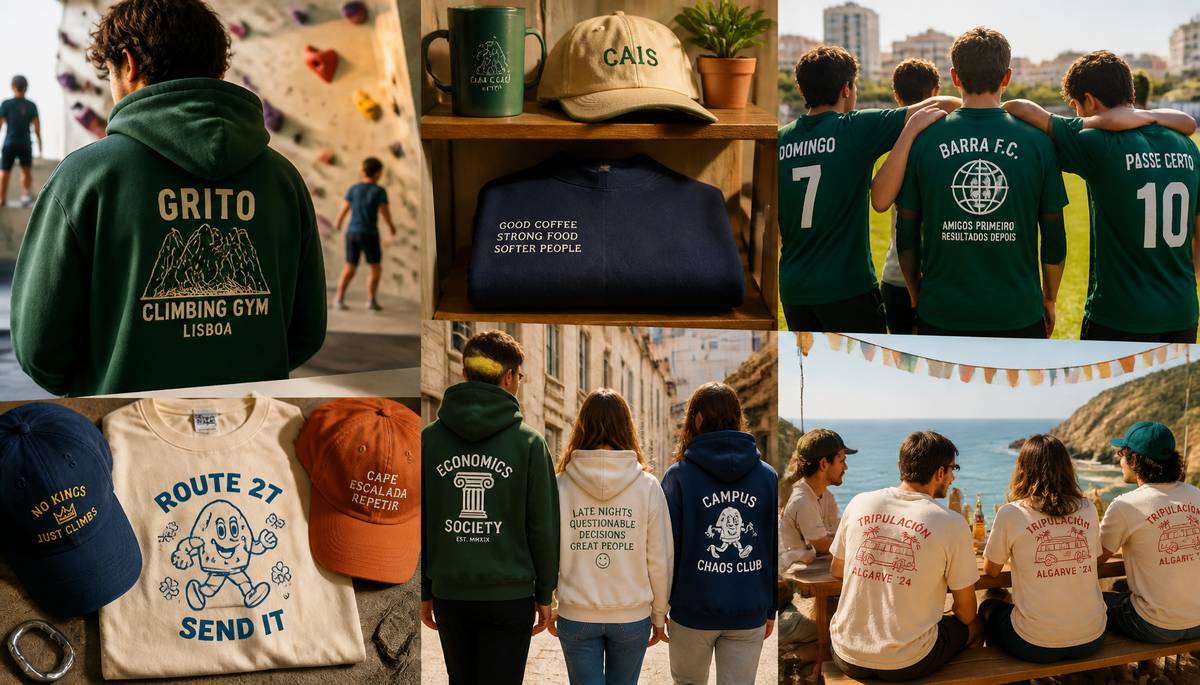 Clothing used to work like a billboard. Big logos, famous labels, expensive sneakers, and carefully visible branding told strangers exactly what someone wanted them to know. Status came packaged in recognizable names. If a shirt had lettering the size of a highway sign, even better.
Now the most interesting clothing trends are happening in places where almost nobody outside the group understands the reference.
A hoodie from a tiny climbing gym in Lisbon suddenly carries more emotional weight than a luxury sweatshirt produced in quantities large enough to clothe a minor nation. A university society shirt designed at 2 a.m. by sleep-deprived students somehow becomes a treasured possession. Five friends on a weekend football team create custom caps with an inside joke so specific it requires diagrams and witness testimony to explain.
None of this was planned by the fashion industry. It happened quietly while major brands were busy charging extra for distressed fabric that already looked exhausted.
Belonging Became More Valuable Than Prestige
People increasingly want clothing attached to experiences, friendships, and communities rather than abstract status. Wearing a shirt linked to a shared memory feels more personal than wearing something chosen by a marketing department in a skyscraper conference room.This shift says something important about modern life. Many people feel disconnected from large institutions but deeply attached to smaller circles. Local sports clubs, climbing groups, gaming communities, student organizations, amateur running crews, music collectives, and niche hobby spaces create genuine identity in a way giant brands struggle to imitate.
Custom clothing became the physical proof those communities exist.
A hoodie from a local boxing club is not just fabric. It represents early mornings, bruised ribs, embarrassing first attempts, victories nobody streamed online, and at least one person named Marco shouting motivational phrases with the intensity of a movie trailer narrator.
Mass fashion rarely captures that kind of meaning.
Social media also accelerated the trend. Smaller groups now build their own visual culture almost instantly. Once a design gains traction inside a community, members want to wear it partly because it signals participation and partly because humans enjoy uniforms far more than they pretend.
Even friend groups create unofficial merchandise now. Birthday trips have custom shirts. Group chats somehow produce embroidered caps. Weekend padel teams behave like multinational sports franchises after winning three consecutive matches against accountants from another district.
Somewhere along the line, everybody became their own merchandise department.
Streetwear Opened the Door
Modern streetwear played a huge role in changing attitudes toward custom apparel. Oversized fits, heavyweight cotton, relaxed silhouettes, and limited-run designs made clothing feel less corporate and more community-driven.Older promotional clothing often looked painfully disposable. Thin shirts. Awkward cuts. Logos floating in strange locations like confused stickers. The kind of garments people wore once before assigning them permanent cleaning-rag duties.
Streetwear changed expectations completely.
Now people care about the actual garment itself. The fit matters. The fabric matters. The color palette matters. Even custom university hoodies increasingly resemble boutique fashion releases instead of emergency conference freebies.
That shift gave smaller communities an opportunity. Once decent-quality blanks became easier to access in smaller quantities, local groups no longer needed massive budgets to produce clothing people genuinely wanted to wear outside mandatory events.
This is why niche communities suddenly look visually cohesive online. A climbing gym can release earth-toned oversized hoodies with minimalist graphics and accidentally create something cooler than half the products inside major shopping malls.
Meanwhile, large brands continue releasing beige hoodies priced like antique furniture.
Hyper-Specific References Became a Social Currency
One of the strangest parts of modern clothing culture is how specific the references have become.Not long ago, fashion aimed for maximum recognition. Today, smaller audiences often create stronger appeal. A shirt referencing a tiny local music event or an obscure university joke can feel more desirable precisely because most people do not understand it.
Scarcity matters, but emotional specificity matters even more.
People enjoy discovering someone wearing clothing connected to the same niche interest because it creates instant recognition without forced conversation. A small logo from a local climbing competition quietly communicates more personality than a giant luxury emblem screaming across someone's chest like a sponsored race car.
There is also an anti-corporate instinct behind all this. Many consumers became skeptical of mass branding. Smaller community apparel feels authentic because it usually starts from enthusiasm rather than market research spreadsheets filled with words like "synergy" and "youth engagement."
Nobody in a student club meeting has ever said, "We need to leverage cross-demographic apparel positioning."
They simply wanted hoodies that looked good.
Why Small Runs Feel More Personal
Mass-produced clothing often feels emotionally interchangeable. Buy it, wear it, forget about it, donate it during a moment of false productivity. Community-driven apparel works differently because it usually arrives attached to a story.A shirt from a local climbing event reminds someone of the route they finally completed after failing twelve times in front of strangers pretending not to watch. A university hoodie recalls chaotic election campaigns, terrible coffee, and group projects where one person mysteriously vanished until presentation day.
These garments become memory containers without trying too hard to become "heritage pieces," which is a phrase fashion companies invented to justify charging alarming amounts for cotton.
Limited quantities also change behavior. People tend to value items connected to a moment that cannot easily be repeated. When only fifty hoodies exist from a local skate competition or independent music night, the clothing feels earned rather than endlessly available.
That emotional attachment changes how people wear the items too. They become part of regular rotation instead of sitting untouched in drawers beside old charging cables and receipts from stores that no longer exist.
Interestingly, this trend also pushed communities to care more about design quality. Nobody wants to wear something that looks like it was assembled during a power outage using default fonts and clip art from 2007.
Smaller groups increasingly think like creative studios:
- Choosing heavier fabrics instead of ultra-thin basics
- Using understated graphics rather than oversized logos
- Selecting colors that people actually wear daily
- Creating designs that work beyond a single event
Algorithms Helped Local Identity Grow
Large fashion trends used to spread from magazines, celebrities, and giant retailers. Algorithms changed that structure completely.Now a local running club in Porto can build a recognizable visual identity online faster than some national brands. A niche gaming community can release embroidered hoodies that instantly circulate through Instagram and TikTok because members proudly share them themselves.
Traditional advertising becomes less important when communities voluntarily promote their own culture.
People trust clothing more when it feels connected to real participation. That authenticity cannot easily be manufactured by companies trying to simulate grassroots appeal through carefully staged campaigns involving suspiciously clean skateboards.
There is also a reaction against digital overload happening here. Much of modern life exists online, temporary and endlessly replaceable. Physical clothing connected to real groups offers something more stable. It becomes evidence that experiences actually happened outside a screen.
That explains why custom apparel now appears everywhere:
- Local cafés selling branded heavyweight sweatshirts
- Independent gyms releasing seasonal drops
- Student societies creating fashion-forward merchandise
- Small music collectives designing limited apparel runs
- Friend groups ordering vacation shirts with absurd internal references
Stitched Together Without Trying Too Hard
Fashion trends often arrive with dramatic declarations about cultural revolutions. This one barely announced itself. Small communities simply started making better clothing for themselves, and people realized those garments carried more meaning than mass-produced status symbols.The shift reflects a broader hunger for connection. Local identity matters. Shared experiences matter. Even painfully niche inside jokes printed on the back of a hoodie apparently matter quite a lot.
A custom sweatshirt from a climbing gym may never appear on a luxury runway. A university society cap will not receive a twelve-minute documentary narrated in a whisper. A local football team's embroidered hoodie probably will not be described as "disrupting the future of apparel culture" by somebody wearing expensive square glasses indoors.
Yet those items often become the clothes people wear most.
Not because they are famous, but because they mean something.
Article kindly provided by matterstu.com
Latest Articles
- When the Location Is Wearing the Clothes Too: Choosing Backdrops That Strengthen a Fashion Story
- How to Choose a Martial Arts Uniform That Moves With You
- From Shop Floor to Storyboard: What Retail Spaces Can Teach Fashion Photographers
- The Quiet Luxury Test: How to Tell When Design Is Doing the Talking
- Using Location as a Fashion Storytelling Tool
- Why Modern Style Is Becoming More Regional Instead of Global
- How Small Communities Quietly Became the Biggest Driver of Custom Clothing Culture
- How Climate Should Influence Your Wardrobe More Than Style Trends
- The Fit Illusion: Why Two Identical Sizes Can Feel Completely Different
- Micro-Fragrance Wardrobes: Why Owning 5 Small Bottles Can Beat 1 Big Signature Scent
- Why Your Wardrobe Feels Wrong Even When It Looks Good
- Capturing Real Emotion Without Telling Anyone to Smile
- Fashion Forward: Emotional Storytelling in Technical Cultures
- The Psychology of Tattoo Aesthetics: Why Certain Imagery Resonates
- Style That Works With Your Body, Not Against It
- Fashion Tourism on Wheels: Curated Shopping Routes Led by Chauffeur Guides
- The Charm of Certainty in a World of Indecision
- Can an Everyday T-Shirt Be Turned into a Modern Heirloom?
- Color, Ceremony, and the Psychology of Celebration
- Styling Graphic T-Shirts for Different Body Types
- Accessories
- Jewellery
- Footwear
- Skirts and Dresses
- Shirts and Blouses
- Beauty and Makeup
- Fashion Photography
- Sustainable Fashion
- Street Style
- Fashion History
- Fashion Business
- Fashion Styling
- Fashion Events
- Plus-Size Fashion
- Men's Fashion
- Women's Fashion
- Fashion Blogging
- Fashion Trends
- Fashion Retailers
- Fashion Tips and Advice
- Fashion Business Startups
- Fashion Around the World
- Lingerie
- Sportswear
- Weddings